
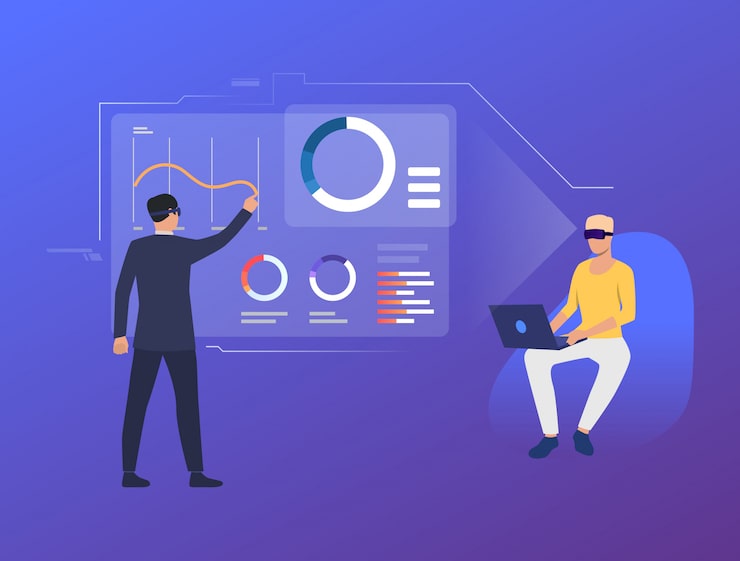
Imagine a cartographer standing before a vast, uncharted landscape—not of mountains and rivers, but of data. Just as early explorers relied on compasses and maps, today’s data scientists rely on algorithms, models, and code to uncover meaning in the ever-expanding world of information.
In an age where every digital interaction produces data, the role of a data scientist has evolved from mere number crunching to shaping the very decisions that drive industries forward. Their craft is as much about curiosity and interpretation as it is about technical mastery.
The Data Whisperer: Translating Complexity into Clarity
A data scientist is like a translator between two worlds—the raw, unstructured chaos of data and the refined insights that organisations depend on. Their mission is not simply to analyse but to interpret, to find patterns that reveal truths hidden beneath the surface.
Modern enterprises rely heavily on these professionals to transform abstract data into an actionable strategy. From identifying consumer behaviour trends to optimising logistics routes, the data scientist plays a crucial role in guiding decision-making.
For those aspiring to join this field, pursuing structured learning such as an AI course in Chennai offers a foundation in the computational and analytical skills needed to turn data into meaningful stories.
The Skill Set of a Modern Explorer
To thrive as a data scientist, one must be both a technologist and a storyteller. Technical skills such as Python, R, SQL, and machine learning frameworks form the bedrock of their toolkit. But beyond tools and code lies the real artistry—the ability to ask the right questions and draw connections others might miss.
Communication is equally vital. Data scientists must convey complex findings to stakeholders in a way that sparks action rather than confusion. It’s this fusion of logic and empathy that distinguishes exceptional professionals from merely competent ones.
They must also be ethical navigators, ensuring that their analyses remain free from bias and their recommendations fair and transparent.
The Interplay of AI and Human Intuition
Artificial intelligence has amplified what data scientists can achieve. With automation handling routine data cleaning and model building, professionals can focus on deeper insights and strategic thinking. Yet, human intuition remains irreplaceable.
AI can predict outcomes based on patterns, but it cannot understand context or morality. The best data scientists know when to trust the machine—and when to question it. This synergy between computational precision and human reasoning is what propels modern analytics forward.
Structured training, like an AI course in Chennai, often helps learners strike this balance—building not only technical competence but also the judgment to apply AI responsibly.
From Insights to Impact: Data Scientists as Strategic Leaders
In many organisations, data scientists have transcended their analytical roles to become strategic partners. They influence decisions that shape product design, marketing campaigns, and even company culture.
By identifying hidden inefficiencies and uncovering new growth opportunities, they create measurable impact. This influence extends across industries—from healthcare and finance to retail and entertainment. Wherever data exists, the fingerprints of a data scientist can be found.
Their work demonstrates that the true value of analytics lies not in prediction alone but in transformation—the ability to turn insights into action.
Conclusion
The role of a data scientist is both scientific and artistic—a blend of logic, creativity, and ethical awareness. As guardians of modern intelligence, they transform the invisible world of data into visible progress.
Mastering this role requires more than just technical skills; it also calls for curiosity, empathy, and a continuous desire to learn. For aspiring professionals, investing in formal education can serve as a guiding point on this exciting journey into the data-driven frontier.
Just as explorers once mapped the physical world, data scientists today map the digital one—charting new territories where information meets innovation.